WILL REGISTRATION
Will Registration
Online in India
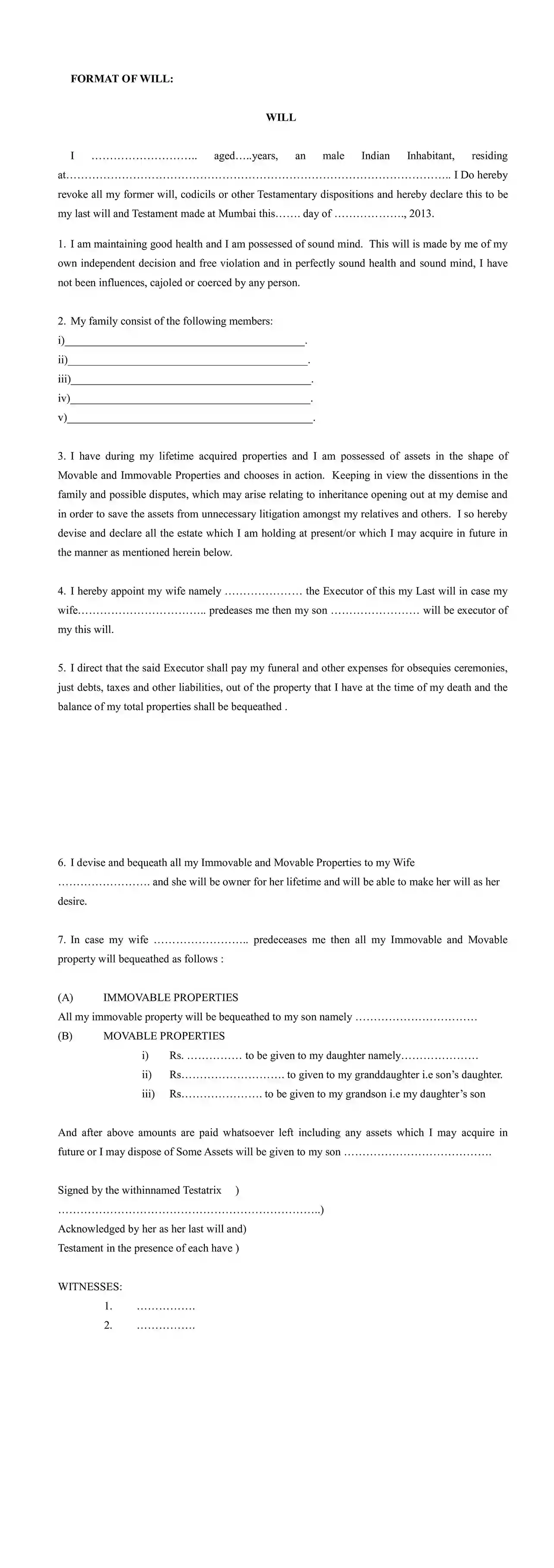
View Sample Will Format
Set Preferred Language (English)
-
 English
-
 मराठी
मराठी
-
हिंदी
-
தமிழ்
-
తెలుగు
-
ಕನ್ನಡ
-
മലയാളം
Comprehensive guidance to ensure your will is legally sound and aligns with your wishes for asset distribution.
Tailored assistance to address specific requirements, ensuring clarity and validity of the will.
Why Choose TMZON
Relying on outdated methods? Experience the TMZON difference today.

Legal Experts
Qualified experts. Every document tailored with precision.

Lightning-Fast Delivery
Don't wait days. Get your draft within 24-48 hours.

Pan-India Coverage
From Kashmir to Kanyakumari – we’ve got your back everywhere.

Transparent Pricing
No hidden fees. Get quality at a price that makes sense.

Easy Process
Just fill a quick form — we handle the rest, start to finish.

Secure & Private
Your data stays yours. Encrypted and protected every step.
Register Your Will in 3 Easy Steps
Share Basic Details
Fill out a quick form or upload your handwritten draft — we’ll begin preparing your Will.
Expert Drafting & Review
Our legal experts will draft your Will with precision, covering all assets and legal formalities.
Get It Registered
We’ll help you with registration at the Sub-Registrar office — including appointments and stamping.
Will Registration Pricing
Choose the plan that suits your Will drafting and registration needs.
Key Features
- Drafting by Legal Experts
- 2-Day Delivery
- Email Consultation
- Hindi/English Draft Options
- Reviewed by Senior Advocate
- 1-time revision included
Key Features
- Draft + Registration
- Appointment at Registrar
- Complete Legal Support
- Valid across India
- Personal legal advisor
- Future updates available
Will Registration — Starting at ₹999 Only!
Want to register a Will that’s legally strong and future-proof? We help you draft and register your Will the right way, without any hassle.

Understanding Wills: An Overview
- A will is a legal instrument that dictates how an individual's assets should be distributed after their demise. The creator of the will, known as the testator, ensures their wishes are honored. Without a will, assets are distributed according to intestate succession laws, which vary based on religion and personal laws.
- Creating a will is a proactive step to ensure that your property is allocated as per your desires, typically to close relatives or friends. In India, while will registration is not mandatory, it is advisable to register it with the Sub-Registrar for added legal validity.
Will Registration in India
- Will registration is a legal process that ensures the testator's assets are distributed according to their wishes. Governed by the Indian Succession Act, 1925, registration is not compulsory but is recommended to avoid disputes.
- Registering a will involves submitting it to the Sub-Registrar's office with additional witnesses. This process, though optional, strengthens the will's authenticity and reduces the need for witness testimony in court.
Key Elements of a Will
- Personal Details: Includes the testator's name, father's name, date of birth, and address.
- Asset Details: A comprehensive list of movable and immovable properties to be distributed.
- Beneficiary Details: Names and personal details of individuals receiving the assets.
- Signatures: The will must be signed by the testator and witnessed by at least two individuals.
- Executor Details: Information about the person responsible for executing the will.
Tips for Drafting a Will
- Ensure the will clearly reflects the testator's wishes without ambiguity.
- Avoid contradictory clauses or language that could lead to misinterpretation.
- Review the will periodically to ensure it remains relevant to the testator's current circumstances.
- Seek professional assistance to ensure legal compliance and clarity.
Documents Needed for Will Registration
- Two passport-sized photographs of the testator.
- A medical certificate confirming the testator's mental fitness.
- The original signed will.
- Two witnesses with their photographs, proof of identity, and address.
- Address proof of the testator.
- PAN cards of the testator and witnesses.
Steps to Register a Will
- Step 1: Visit the Sub-Registrar's office in the testator's residential area or where the property is located.
- Step 2: Submit the will for examination by the registrar to ensure legal accuracy.
- Step 3: Pay the registration fee, which varies by state.
- Step 4: Arrange for two witnesses to be present during registration.
- Step 5: Receive a copy of the registered will as proof of registration.
Eligibility for Will Registration
- The testator must be at least 18 years old and of sound mind.
- The will must be signed in the presence of two competent witnesses.
- The testator must understand the implications of creating a will and do so without coercion.
Types of Wills in India
- Privileged Wills: Created by soldiers, airmen, or mariners engaged in active service. These do not require witnesses.
- Unprivileged Wills: Must be written, signed, and witnessed by two individuals.
- Mutual Wills: Created by two individuals with mutual agreements on asset distribution.
- Codicils: Amendments or additions to an existing will.
- Conditional Wills: Subject to specific conditions for execution.
Pros and Cons of Will Registration
- Advantages:
- Prevents loss or damage to the will.
- Ensures the will's authenticity and validity.
- Facilitates smooth transfer of assets to beneficiaries.
- Disadvantages:
- Revoking a registered will is a complex process.
- Any updates or changes must also be registered.

Safeguarding Your Will
- Store the will in a secure location, such as a safe deposit box or with a trusted legal advisor.
- Provide copies of the will to beneficiaries, ensuring they understand the contents.
- Clearly state that both the original and copies hold equal legal weight.
- Distribute copies promptly after execution to avoid disputes or confusion.
Will vs Trust vs Power of Attorney
Will distributes assets, trust manages them, power of attorney delegates decisions
| Category | Will | Trust | Power of Attorney |
|---|---|---|---|
| What’s Protected | Distribution of assets and properties after the testator's death. | Management and distribution of assets during and after the grantor's lifetime. | Legal authority to make decisions on behalf of the grantor, often during their lifetime. |
| Requirements for Creation | Must be in writing, signed by the testator, and witnessed by at least two individuals. | Requires a legal document (trust deed) and transfer of assets into the trust. | Must be in writing, signed by the grantor, and notarized or witnessed as per local laws. |
| When It Takes Effect | After the death of the testator. | Immediately upon creation or as specified in the trust deed. | Immediately upon signing or upon a specific event (e.g., incapacity of the grantor). |
| Control Over Assets | Testator retains control until death; executor manages distribution afterward. | Trustee manages assets as per the trust deed; grantor can retain some control if revocable. | Agent (attorney-in-fact) makes decisions as per the grantor's instructions. |
| Term of Validity | Remains valid until revoked or replaced by a new will. | Can be revocable or irrevocable, lasting for a specified period or indefinitely. | Valid until revoked, the grantor's death, or a specified expiration date. |
| Legal Process After Death | Requires probate court approval for execution. | No probate required; assets are distributed as per the trust deed. | Terminates upon the grantor's death; no authority over assets after death. |
| Flexibility | Can be amended or revoked by the testator at any time. | Revocable trusts offer flexibility; irrevocable trusts are more rigid. | Can be general (broad authority) or specific (limited to certain decisions). |
Some common questions
were often asked
What is a will, and why is it important?
A will is a legal document that outlines how your assets will be distributed after your death. It ensures your wishes are followed and prevents disputes among family members.
Is it mandatory to register a will in India?
No, will registration is not mandatory in India. However, registering a will adds legal validity and makes it harder to challenge in court.
Can I make changes to my will after registration?
Yes, you can update or modify your will at any time. If the changes are significant, it is advisable to re-register the updated will.
Who can be a witness for will registration?
Any two adults of sound mind who are not beneficiaries in the will can act as witnesses. Their role is to confirm the authenticity of the will.
What happens if I die without a will?
If you die without a will, your assets will be distributed according to the laws of intestate succession, which may not align with your wishes.
How long does it take to register a will?
The process of registering a will typically takes a few days, depending on the availability of the Sub-Registrar and the completeness of your documents.