Trademark Class 17: Rubber, Asbestos, Mica and Plastics

Last updated: 20 June 2025

Trademark Class 17 covers rubber, gutta-percha, gum, asbestos, mica and plastics in semi-processed form, as well as insulation materials and flexible pipes not of metal. This class protects brands in the industrial materials and insulation sectors.

Trademark Class Finder
0
Selected Classes for Pricing

No matches found. Please try different keywords.

Trademark Classes Overview (1–45)
Trademark Registration Plans
Standard
₹999 per class
Trademark search
Application preparation
Filing with USPTO
Email support
Basic monitoring
Get Started
Premium
₹1,999 per class
Everything in Basic
Comprehensive search
Attorney review
Response to office actions
6-month monitoring
Get Started
Examples
Related Keywords

Overview

Illustration of rubber and insulation products under trademark class 17

Trademark Class 17 includes a wide range of semi-processed materials used in manufacturing and construction. This class covers raw and semi-worked rubber, insulation materials, and various plastic substances in semi-processed form.

It includes gaskets, seals, insulating materials, and flexible non-metallic pipes. Registering under Class 17 helps secure exclusive rights for businesses involved in producing or distributing these essential industrial materials. For more details, visit the official website of Intellectual Property India.

Key Categories Under Class 17
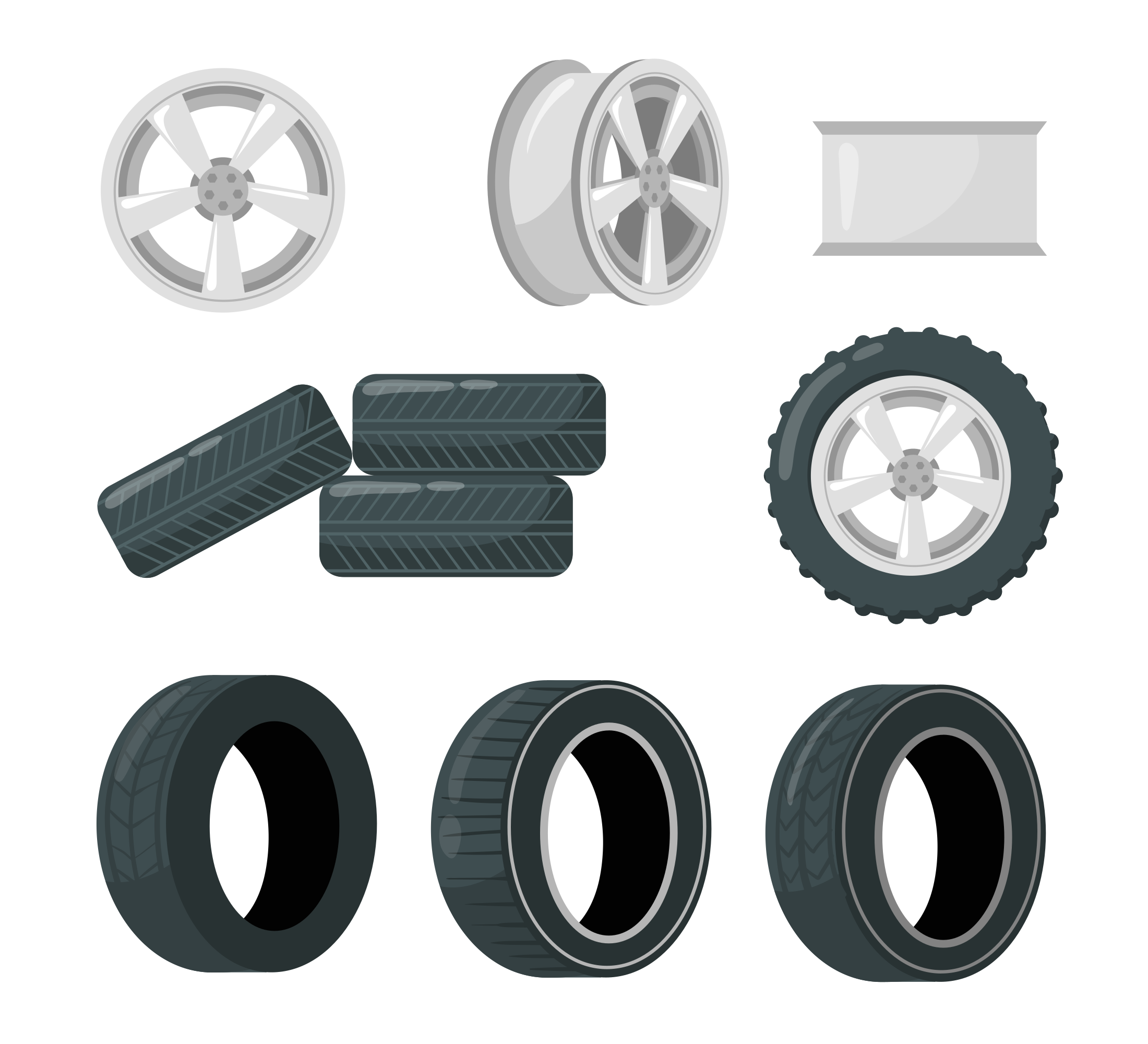
Illustration of products covered under trademark class 17
  • Rubber Products: Raw and semi-processed rubber goods
  • Insulation Materials: Thermal and electrical insulation products
  • Plastic Materials: Semi-processed plastics and resins
  • Asbestos Products: Various forms of asbestos materials
  • Flexible Pipes: Non-metallic hoses and tubing
  • Sealing Materials: Gaskets, packings and sealants

Goods Classified Under Class 17

Acrylic resins [semi-finished products]
Adhesive bands/tapes (non-stationery, non-medical)
Anti-dazzle films for windows [tinted films]
Asbestos products (sheets, felt, paper, fabrics, fibers)
Bags of rubber for packaging
Balata (natural rubber)
Bark coverings for sound insulation
Boiler compositions to prevent heat radiation
Brake lining materials (partly processed)
Canvas hose pipes
Carbon fibers (non-textile use)
Caulking materials
Cellulose acetate (semi-processed)
Chemical leak repair compositions
Clack valves of rubber
Clutch linings
Compressed air pipe fittings (non-metal)
Connecting hoses for vehicle radiators
Cords of rubber
Cotton wool for packing/caulking
Cylinder jointings
Dielectrics [insulators]
Draught excluder strips/weatherstripping
Ebonite [vulcanite] and ebonite molds
Elastic threads/yarns (non-textile use)
Expansion joint fillers
Fiberglass fabrics for insulation
Fiberglass/glass fibers for insulation
Filtering materials (semi-processed plastics)
Flexible tubes (non-metal)
Floating anti-pollution barriers
Foam supports for flower arrangements
Foil/sheets of regenerated cellulose (non-wrapping)
Foil of metal for insulating
Gaskets/joint packings/seals
Glass wool for insulation
Gum (raw or semi-worked)
Gutta-percha
Hoses of textile material
Insulating materials (various forms)
Insulating oils/paints/varnish
Insulating tape/band
Insulating refractory materials
Insulators for various applications
Junctions for pipes (non-metal)
Latex [rubber]
Liquid rubber
Mica (raw or partly processed)
Mineral wool [insulator]
Non-conducting heat retention materials
Packing/stuffing materials of rubber/plastics
Paper for electrical capacitors
Pipe gaskets/joint packings
Pipe muffs/jackets (non-metal)
Plastic film (non-wrapping)
Plastic substances (semi-processed)
Plastic fibers (non-textile use)
Plastic sheeting for agriculture
Heat radiation prevention compositions
Reinforcing materials for pipes (non-metal)
Rings of rubber
Rubber seals for jars
Rubber (raw or semi-worked)
Rubber stoppers
Rubber sleeves for machine parts
Rubber material for tire recapping
Rubber solutions
Sealant compounds for joints
Self-adhesive tapes (non-stationery, non-medical)
Shock-absorbing rubber buffers
Slag wool [insulator]
Soundproofing materials
Stops of rubber
Synthetic rubber
Synthetic/artificial resins (semi-finished)
Plastic soldering threads
Rubber threads (non-textile use)
Plastic material threads (non-textile)
Valves of india-rubber/vulcanized fiber
Viscose sheets (non-wrapping)
Vulcanized fiber
Washers of rubber/vulcanized fiber
Water-tight/stuffing rings
Watering hose
Waterproof packings
Weatherstripping compositions

Goods Not Classified Under Class 17

Finished rubber products for medical use (Class 10)
Rubber gloves for medical/surgical use (Class 10)
Household rubber gloves (Class 21)
Rubber bands for stationery (Class 16)
Adhesive tapes for stationery/medical use (Class 16/5)
Rubber tires for vehicles (Class 12)
Rubber flooring materials (Class 19)
Rubber mats (Class 27)
Rubber clothing (Class 25)
Rubber footwear (Class 25)
Rubber toys (Class 28)
Rubber sports equipment (Class 28)
Rubber erasers (Class 16)
Rubber stamps (Class 16)
Plastic wrap for food (Class 16)
Plastic tableware (Class 21)
Plastic furniture (Class 20)
Plastic building materials (Class 19)
Plastic flooring (Class 19)
Plastic packaging containers (Class 20)
Plastic textile fibers (Class 23)
Plastic insulation for electric wires (Class 9)
Plastic optical fibers (Class 9)
Plastic garden hoses (Class 19)
Plastic flowers (Class 28)
Plastic decorative items (Class 20)
Mica products for electrical purposes (Class 9)
Asbestos clothing (Class 9)
Asbestos gloves for protection (Class 9)
Asbestos filters (Class 11)
Finished plastic products (various classes)
Rubberized fabrics (Class 22)
Rubber threads for textile use (Class 23)

Intellectual Properties You Should Trademark Under Class 17

  • Brand Names: The names of your rubber/plastic product lines
  • Logos: Distinctive symbols representing your industrial materials business
  • Slogans: Catchphrases associated with your insulation or rubber products
  • Product Formulations: Unique rubber/plastic compounds with brand recognition
  • Packaging Designs: Distinctive packaging for industrial materials
  • Service Marks: For companies providing material distribution or insulation services
  • Trade Dress: The overall visual appearance of your industrial product packaging

Why Register Under Class 17

Illustration of why it matters
  • Exclusive Rights: Protect your rubber/plastic products from competitors using similar marks
  • Brand Recognition: Establish your brand in the industrial materials sector
  • Market Expansion: Secure your position when expanding into new markets
  • Legal Protection: Ability to take action against counterfeit materials
  • Asset Value: Trademarks can appreciate as your business grows
  • 10-Year Protection: Renewable protection for your brand
  • Begin your trademark registration process with TMZON today.

Registration Process

  • Before registering under Class 17, search our database to check availability.
  • Trademark Search: Comprehensive search for similar marks
  • Application Preparation: Gather product specifications
  • Filing: Submit your application
  • Examination: Review by trademark office
  • Publication: Public notice period
  • Registration: Final approval
  • Maintenance: Renew every 10 years

Why Choose TMZON

Why choose TMZON for trademark registration
  • Industrial Expertise: Specialized in material science trademarks
  • Comprehensive Searches: Thorough clearance process
  • Streamlined Process: Efficient handling of paperwork
  • Global Protection: International registration assistance
  • Ongoing Support: Monitoring and enforcement services
  • Cost-Effective: Competitive pricing for manufacturers

Unsure About Your Trademark Class?

Get expert guidance with a free 30-minute consultation for your rubber/plastic products business.

Book Free Consultation

Common Questions About Class 17

What's the main focus of Class 17?

Class 17 primarily covers rubber, asbestos, mica and plastics in semi-processed form, along with insulation materials and flexible non-metallic pipes.

Are rubber gloves in Class 17?

No, medical rubber gloves are in Class 10, household rubber gloves in Class 21. Class 17 covers raw/semi-processed rubber materials.

Does Class 17 include plastic furniture?

No, finished plastic products like furniture fall under Class 20. Class 17 covers semi-processed plastic materials.

Are rubber tires in Class 17?

No, vehicle tires are classified under Class 12. Class 17 covers raw rubber materials used in manufacturing.

Is plastic packaging in Class 17?

Only semi-processed plastic materials are in Class 17. Finished plastic packaging containers are in Class 20.

Are rubber bands for stationery in Class 17?

No, stationery rubber bands are classified under Class 16. Class 17 covers industrial rubber materials.